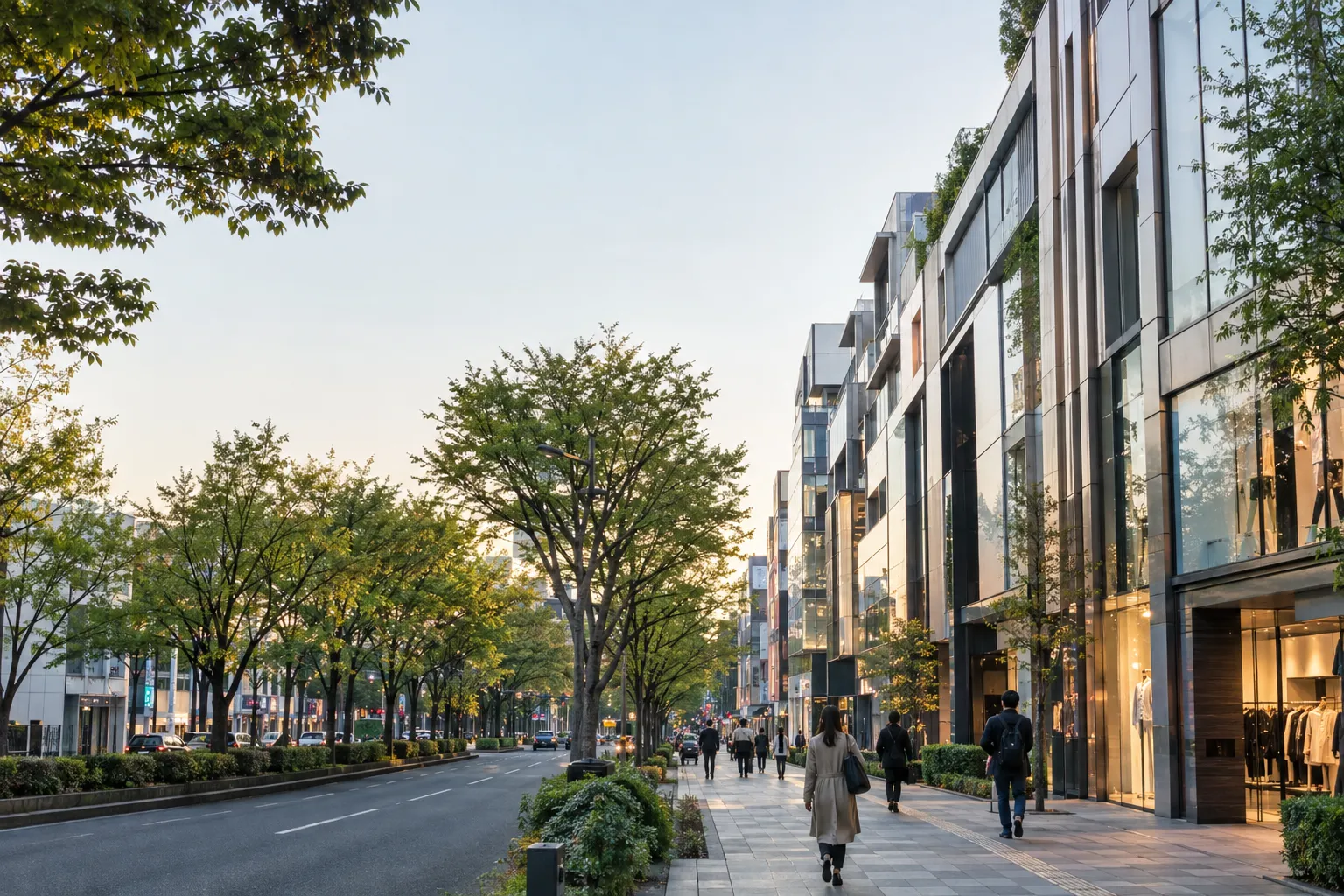
Tokyo’s fashion districts offer more than shopping: they show how personal style responds to neighbourhood, pace and culture. Compare Harajuku’s expressive youth scene, Shibuya’s contemporary energy, the design-minded streets of Aoyama and Omotesando, and Ginza’s polished retail landscape. This guide helps visitors choose where to spend time and how to explore with curiosity rather than a checklist.
Harajuku is known for youth fashion, kawaii culture and vintage-designer browsing, including around Cat Street.
Shibuya offers a lively contemporary fashion scene and major shopping destinations such as Shibuya 109, Shibuya Hikarie and Parco, as identified by GO TOKYO. These references are not endorsements or guarantees of current store arrangements.
Distinct district perspectives: Harajuku, Shibuya, Aoyama and Omotesando, and Ginza
4
Access points identified for Harajuku: Harajuku Station and Meiji-jingumae Station
2
Shopping destinations named in Shibuya: Shibuya 109, Shibuya Hikarie and Parco
3
Official guide notes weekend pedestrian hours on Ginza’s main thoroughfare; check current arrangements
1
An introduction
Fashion districts and personal style in Tokyo
Tokyo’s fashion districts are best understood as a series of distinct conversations about identity. From Harajuku’s experimental youth culture to Ginza’s refined retail streets, the city invites visitors to look beyond labels and notice how personal style responds to place.
Read Tokyo’s style through its neighbourhoods
Tokyo’s fashion character is not concentrated in a single shopping quarter. It changes as the city does: youthful and expressive around Harajuku, energetic in Shibuya, considered along Omotesando and Aoyama, and polished in Ginza. These are not rigid dress codes or sealed-off scenes. They are useful starting points for understanding how place, retail and individual taste meet in the capital.
A city of distinct style moods
A visit becomes more rewarding when shopping is treated as a way to observe the city rather than a checklist of stores. Look at how people combine silhouettes, how a street changes from a broad avenue to a narrow lane, and how a familiar piece can feel different in a new setting. The districts below offer contrasting moods, so a day can be shaped around curiosity rather than a single idea of what Tokyo style should be.
Expressive and exploratory
Harajuku: experimentation, kawaii and vintage
Start with Harajuku when the interest is fashion as self-expression. Its reputation is tied to youth culture, but the district is more varied than a single trend or photographic shorthand.
Treat the area as a neighbourhood, not a costume
Harajuku is closely associated with fashion-conscious youth and kawaii culture. Its appeal lies not only in any single look but in the variety of ways people use clothing to signal humour, belonging, experimentation or a deliberate refusal to blend in. The district rewards an unhurried walk: observe the change in atmosphere between busy shopping streets and smaller lanes, and resist reducing its fashion to one visual stereotype.
Look beyond the headline streets
Cat Street is noted for a mix of vintage and designer shopping, making it a useful counterpoint to the district’s more conspicuous retail corridors. Vintage browsing can reveal how personal style develops through selection and combination: a piece gains meaning through its cut, condition and the way it sits alongside newer clothing. Store stock and opening arrangements vary, so check individual businesses before building a tightly timed visit around a particular find.
Build in time for wandering
Harajuku is served by Harajuku Station and Meiji-jingumae Station, identified by GO TOKYO as access points. A walk that begins or ends near either station can leave room to move on foot between shopping streets and nearby areas. Allow time to pause and look rather than trying to cover every lane; the details that make the district distinctive are often found between destinations.
Contemporary and kinetic
Shibuya: contemporary fashion in motion
Shibuya’s fashion scene is best approached as part of a larger cultural landscape. Its shopping destinations, transport connections and lively public spaces make it a vivid contrast with the quieter design-minded streets nearby.
Notice the range beneath the pace
Shibuya’s fashion identity is shaped by its role as a trend-setting centre of contemporary culture. The area moves at a different tempo from Harajuku: large commercial destinations and busy streets sit alongside smaller discoveries, with fashion part of a broader mix of shopping, art and urban life. GO TOKYO identifies Shibuya 109 as a youth-fashion destination and Shibuya Hikarie and Parco among its shopping and dining options.
Read street style without generalising
Instead of treating Shibuya as a synonym for one trend, use it to observe how styles circulate. The most visible outfits may be only one part of a much wider scene. Consider how practical city clothing, individual accents and fashion retail coexist in public space. This perspective keeps a visit grounded in everyday expression rather than the expectation that every passer-by represents a particular subculture.
Use Shibuya as an anchor
Shibuya Station is served by multiple rail lines, according to the official Tokyo guide. That makes the district a natural point in a broader western-Tokyo day, but it can also feel busy. Choose one or two destinations and leave space between them, particularly if the aim is to browse rather than simply cross the area. Check current access and opening details for individual venues before setting off.
Design-minded and composed
Aoyama and Omotesando: fashion with a design perspective
Aoyama and Omotesando make sense as a linked exploration of fashion, architecture and visual design. The area offers a useful counterpoint to the more overt street-fashion energy of nearby districts.
Compare boulevard and boutique
Omotesando’s tree-lined boulevard has a high-fashion character, while nearby Aoyama is associated with smaller boutiques. Together, they offer a more measured retail experience than the busiest parts of Harajuku and Shibuya. The distinction is not simply between expensive and inexpensive clothing; it is also about pace, presentation and the relationship between a store and the street around it.
Let design shape the walk
Architecture is part of the experience here. GO TOKYO points to the area’s architectural interest as well as art and dining, so fashion browsing can be combined with looking at buildings and taking a break without turning the day into a shopping-only itinerary. Pay attention to the way storefronts frame clothing and how the streetscape influences the mood of a visit.
Find ideas in restraint
For personal style inspiration, this district can prompt a different question from Harajuku: rather than asking what feels bold, consider what feels considered. Look for proportion, fabric, restraint and small details. These are observations rather than rules; the point is to gather ideas that suit your own wardrobe, not to reproduce a neighbourhood’s visual language wholesale.
Polished, with quieter corners
Ginza: luxury retail and the quieter backstreets
Ginza is often approached through its luxury retail, but its character is more layered. The contrast between the central avenue and its backstreets makes it especially suited to a slow, observant visit.
Move from the main street into the lanes
Ginza offers a more polished view of Tokyo retail. GO TOKYO describes its main street through department stores and luxury labels, while the backstreets contain boutiques and small restaurants. This contrast makes the district worth exploring beyond the best-known storefronts: the mood can shift noticeably as one turns away from the main thoroughfare.
Make room for culture
Ginza’s identity also extends beyond clothing. The official guide notes galleries and Kabukiza among the area’s cultural points of interest. Bringing these into the day gives fashion a wider context: retail sits alongside performance, visual art and the rituals of city life. The result is less a single shopping circuit than a considered afternoon shaped by several kinds of looking.
Check current arrangements
GO TOKYO notes that the main thoroughfare has pedestrian hours on weekends, but arrangements can change. Confirm current details before planning around a car-free walk or a particular time. For other practical matters, such as shop hours, exhibitions and access, check the relevant venue’s own information close to the visit.
A practical approach
How to explore Tokyo’s fashion districts
A good itinerary balances contrast with breathing room. Rather than crossing the city repeatedly, group neighbouring districts and give each a different purpose.
Choose a manageable geographic arc
The districts can be joined into a coherent western-Tokyo day without attempting to see everything. GO TOKYO’s first-time visitor guide groups Shibuya, Harajuku and Shinjuku in one itinerary day and recommends exploring Harajuku fashion and vintage stores. For a more focused style itinerary, concentrate on Harajuku and Shibuya, then add Aoyama and Omotesando if time and energy allow. Ginza is a distinct central-Tokyo experience and is often more satisfying as its own half-day or a separate visit.
Let the pace change with the neighbourhood
A simple sequence is to begin with Harajuku, spend time browsing Cat Street and nearby streets, then continue towards Omotesando and Aoyama to notice the shift in retail and architecture. Shibuya can form a lively end point, or a separate visit if a slower pace is preferable. This is a suggested way to think about the areas, not a fixed route; use a current map and transport information to plan the connections that suit your day.
Keep the day flexible
Wear comfortable shoes and leave space for unplanned stops. Tokyo’s fashion districts reward walking, but distances, crowds and weather affect how much ground feels enjoyable. Keep a short list of places you genuinely want to see rather than a packed schedule, and verify individual store or venue arrangements directly. If shopping is secondary, choose one district for browsing and another for architecture, art or a meal.
A visitor’s perspective
Personal style: what visitors can take away
The most useful souvenir from a fashion district may be an idea rather than a purchase. Tokyo’s different neighbourhoods offer ways to think about clothing, identity and the atmosphere of a street.
Take inspiration, not a template
Personal style in Tokyo is not a single look to adopt. It emerges through individual choices made in a city with many overlapping scenes: playful, understated, vintage, designer-led and practical. Visitors can take inspiration from those contrasts without mistaking a neighbourhood’s reputation for a rule about what its residents wear.
Look closely and respectfully
A useful way to observe is to focus on details: how a silhouette is balanced, how colour is used sparingly or boldly, or how older and newer pieces are combined. Notice the setting too. The same outfit can read differently on a busy commercial street, a quieter boutique lane or a broad boulevard. These small observations can be more lasting than a list of purchases.
Respect the people behind the style
As a visitor, be considerate when photographing people. Ask permission before taking a close or identifiable portrait, and follow any posted rules at shops and cultural venues. A thoughtful approach keeps attention on the city’s style without treating individuals as scenery.
A considered conclusion
Explore Tokyo through style, not a checklist
A visit to Tokyo’s fashion districts can be both visually rich and quietly practical: a way to discover places while refining your own sense of what feels right.
A city best read in contrasts
Tokyo’s fashion geography is compelling because its districts do not resolve into one definitive aesthetic. Harajuku invites experimentation, Shibuya makes contemporary culture feel immediate, Aoyama and Omotesando reward attention to design, and Ginza balances major retail with quieter cultural and commercial streets. Each offers a different lens on how people dress and how fashion inhabits the city.
Finish with curiosity
Choose the areas that match your curiosity, verify current practical details, and leave time to notice what happens between destinations. Whether the day is spent browsing vintage rails, looking at architecture or walking Ginza’s backstreets, the most rewarding approach is attentive rather than exhaustive. Tokyo’s style is not a formula; it is an invitation to look more closely.
Which Tokyo district is best for youth fashion and kawaii culture?
Harajuku is associated with fashion-conscious youth and kawaii culture. GO TOKYO also notes Cat Street’s mix of vintage and designer shopping.
Where can I find a more design-focused fashion walk in Tokyo?
Aoyama and Omotesando pair high-fashion retail and smaller boutiques with architecture, art and dining interests, according to GO TOKYO.
What is the difference between shopping in Harajuku and Ginza?
Harajuku is associated with youth fashion, kawaii culture and vintage shopping. Ginza offers department stores and luxury labels on its main street, with boutiques and small restaurants in the backstreets.
Can I explore Harajuku, Omotesando and Shibuya in one day?
They can be grouped into a western-Tokyo day, but a relaxed visit is better served by choosing a few priorities and leaving time to walk. Use current maps and transport information to plan connections.
Are Ginza’s main-street pedestrian hours guaranteed every weekend?
GO TOKYO notes weekend pedestrian hours, but arrangements may change. Confirm current details before planning around them.