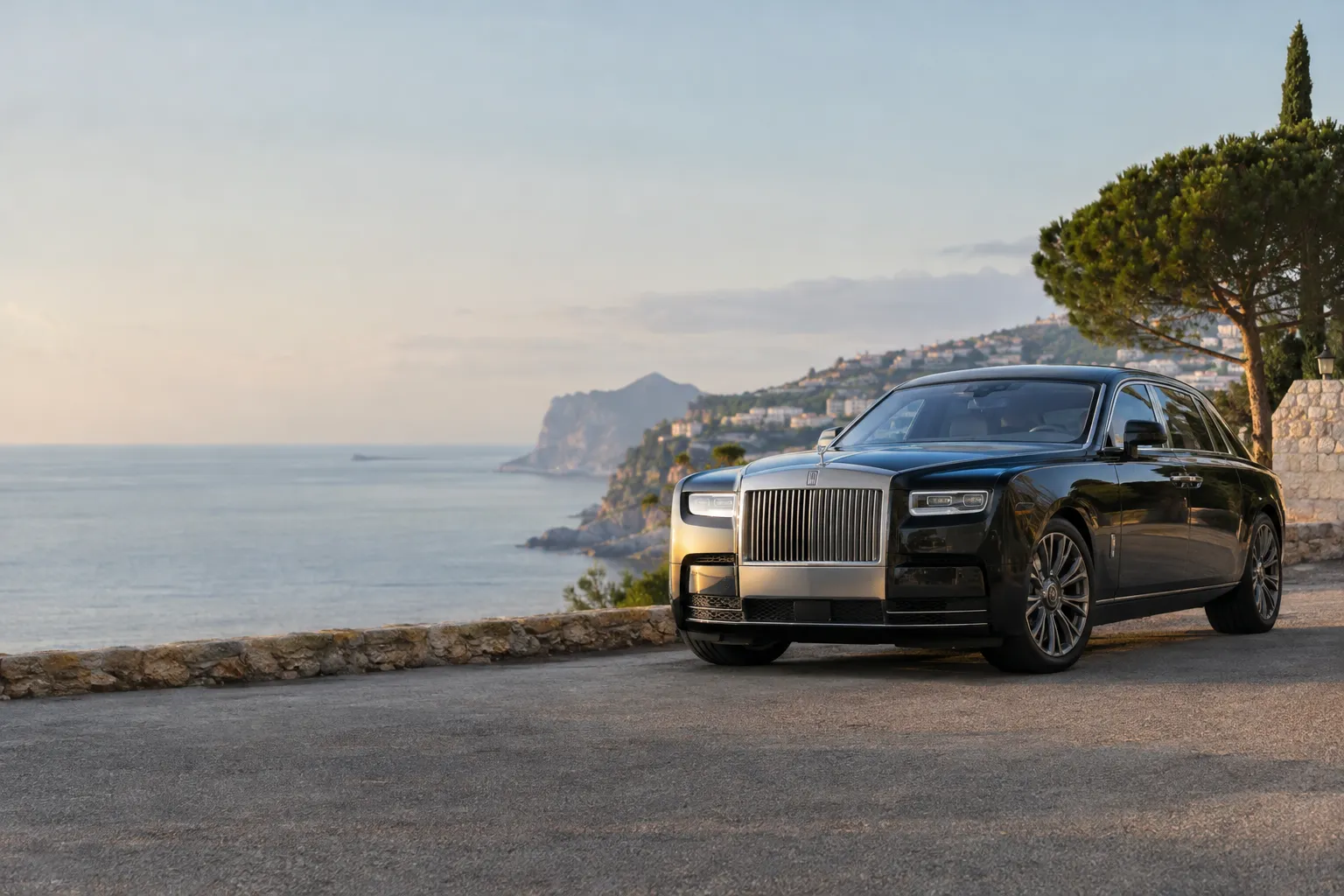
Rolls-Royce is best understood as more than a familiar name or a single style of car. Its story combines an early partnership, a contemporary model range and a design process that gives individual specification a prominent place. This guide explores the marque’s history, cars, Bespoke approach and Goodwood connection, with practical pointers for readers who want to research the subject carefully.
Rolls-Royce Motor Cars traces its origins to the meeting of Charles Rolls and Henry Royce in Manchester on 4 May 1904. The marque’s modern production home is Goodwood, where production began in 2003.
The range includes Phantom, Ghost, Cullinan and the all-electric Spectre. Bespoke commissioning supports individual design choices, while current vehicle specifications and options should be checked for the relevant market. Rolls-Royce says it no longer offers public factory tours at Goodwood.
Charles Rolls and Henry Royce first met in Manchester.
4 May 1904
Production began at Goodwood.
1 January 2003
Phantom, Ghost, Cullinan and Spectre are featured in the current range.
4 model lines
Rolls-Royce states it no longer offers a public Goodwood factory-tour programme.
No public factory tours
Origins and identity
Rolls-Royce history and the modern marque
A brief history clarifies what the name refers to and how the modern marque relates to its past.
Understanding Rolls-Royce beyond the badge
The name Rolls-Royce carries a century-long association with carefully made motor cars, but understanding the marque means looking beyond the badge. Its story brings together an early partnership between two very different men, a tradition of engineering and coachbuilding, and a modern approach in which customers can shape many details of a car. Today, the range includes saloons, an SUV and an all-electric model, giving the marque more than one expression of its design values.
This guide looks at Rolls-Royce as a subject in its own right: how the partnership began, how the marque developed, what distinguishes the current models, and why Bespoke design matters. It also offers a practical framework for comparing the cars without assuming that one model or specification suits everyone.
Rolls-Royce history: from Manchester to Goodwood
The familiar name represents Rolls-Royce Motor Cars, the automobile marque, rather than the separate aero-engine company Rolls-Royce plc. The distinction matters when reading about the brand: the two organisations share a historical name, but they are separate businesses. Rolls-Royce Motor Cars is based at Goodwood, where production began in 2003.
For readers interested in the company’s origins, the official history records the first meeting of Charles Rolls and Henry Royce in Manchester on 4 May 1904. Their partnership joined Royce’s engineering work with Rolls’s experience in motoring and sales. That meeting provides a clear starting point for the automobile story, while the Goodwood era represents a later chapter in the marque’s development.
The timeline is not simply a sequence of models. It is a continuing effort to maintain recognisable identity while adapting design, technology and customer expectations. Distinguishing historical milestones from present-day product details helps make the story easier to follow.
The present-day range
Rolls-Royce models and how to choose between them
The model names describe different formats and priorities; a useful comparison begins with the intended use.
Rolls-Royce models: Phantom, Ghost, Cullinan and Spectre
Rolls-Royce’s model range is best understood by considering the different roles its cars are designed to fulfil. Phantom is the marque’s flagship saloon, with a focus on formal presence and an expansive, highly considered interior. Ghost offers a different saloon character within the same broad tradition. Cullinan brings the marque’s approach to a sport utility vehicle, while Spectre introduces an all-electric model to the range.
These distinctions are useful starting points, not a substitute for comparing individual specifications. Model names alone do not establish exact equipment, dimensions, availability or current configuration. Those details can vary by model year and market, so a buyer should consult current official product information before making a decision.
Rather than asking which Rolls-Royce is simply “best”, consider how the car will be used. Think about who normally travels in it, whether rear-seat or driver-focused use matters more, the kinds of journeys involved, and the importance of electric propulsion. This approach makes the choice more personal and avoids treating very different vehicles as interchangeable.
Phantom: flagship saloon character.
Ghost: a distinct saloon within the range.
Cullinan: the marque’s SUV line.
Spectre: the all-electric model.
How to compare Rolls-Royce models for real-world use
A comparison should begin with the experience each model is intended to provide, then move to specific requirements. A saloon may suit someone who values a traditional formal profile; an SUV may be more appropriate when a higher-riding format is preferred. An electric model raises additional questions about charging arrangements, typical distances and the owner’s local infrastructure. None of these considerations can be resolved by styling alone.
When researching, check the current model pages for specifications in the relevant country, then confirm any details that are important to your use. Pay attention to seating, luggage needs, the balance between travelling in the rear and driving, and the practicality of charging if considering an electric car. If you are evaluating pre-owned examples, the exact vehicle’s history and condition require separate, vehicle-specific checks.
For a passenger who wants to experience a Rolls-Royce without purchasing one, London Direct Chauffeurs lists Rolls-Royce vehicles as available on request for its chauffeur services. This is a practical option to enquire about, not a claim that a particular model or date is guaranteed; confirm the vehicle and arrangements directly before relying on them.
Personal design
Rolls-Royce Bespoke and craftsmanship
Bespoke design is central to understanding how the marque approaches individual expression and specification.
Rolls-Royce Bespoke: making a car individual
Bespoke is the marque’s approach to individualising a motor car through a collaborative design process. Instead of treating the car only as a fixed catalogue choice, the commissioning process can involve decisions about colours, materials, finishes and personal details. The official Bespoke information presents this as a dialogue between the client and the marque’s specialists, with the aim of creating a car shaped around a particular brief.
That idea is significant because it changes how the product is considered. The exterior and interior are not merely a set of options; they can express a chosen palette, reference or personal story. The result depends on the design decisions made for each commission, so examples shown by the marque should not be mistaken for standard equipment or a promise that every feature is available in every market.
For anyone exploring a Bespoke commission, preparation is valuable. Gather references, identify what matters most, and separate lasting preferences from details that may feel temporary. Confirm the scope, materials, timing and any market-specific limitations with the marque or an authorised representative. The creative possibilities should be balanced with clear understanding of the final specification.
Rolls-Royce craftsmanship and the role of detail
Craftsmanship is often discussed through visible details, but the more useful perspective is to consider how choices work together. Paint, trim, textiles and surface finishes contribute to a coherent interior and exterior rather than acting as unrelated decorations. A restrained specification may depend on subtle contrasts; a more personal commission may use a distinctive motif or a specific colour story. In either case, the quality of the overall composition matters as much as any single feature.
The official craft and Bespoke pages are useful for understanding the marque’s own descriptions of process and personalisation. They are not a substitute for inspecting a particular car or confirming what is included in a specific order. If a detail is important, ask how it is made, whether it is configurable, and how it will appear in the final vehicle.
This attention to specification also has a practical side. Consider how materials will be used and maintained, how a chosen colour works in different light, and whether a personal detail will remain meaningful over time. Thoughtful commissioning balances expressive design with daily use.
Design and place
Rolls-Royce design and Goodwood
The marque’s visual identity and its Goodwood base are important parts of the story, but they need to be understood in context.
Rolls-Royce design language and the Spirit of Ecstasy
The Spirit of Ecstasy is among the most recognisable elements associated with Rolls-Royce, but the marque’s identity is broader than a single emblem. Its visual language includes the proportions of the car, the relationship between exterior and interior, and details that are interpreted differently across models. Looking at the whole design helps explain why the cars can appear related without being identical in purpose or character.
A useful way to read a design is to consider its balance: how the front, cabin and rear relate; how the bodywork frames the windows; and how interior materials support the intended atmosphere. Official model and Bespoke material can help identify the manufacturer’s stated design ideas, while direct viewing is useful for noticing scale, finish and colour in person.
Images can flatten these qualities. Lighting and camera angle can change the appearance of paint and materials, and a published commission may not represent a standard configuration. Treat photographs as an introduction, then seek current, market-specific information for the exact model and specification you are considering.
Goodwood and what visitors should know
Goodwood has an important place in the current story of Rolls-Royce Motor Cars. The company’s heritage material identifies it as the Home of Rolls-Royce and records that production began there on 1 January 2003. That fact links the modern marque to a specific manufacturing location without suggesting that the site is an ordinary public attraction.
The manufacturer’s FAQ states that it no longer offers a public Goodwood factory-tour programme. Readers should therefore avoid planning a visit on the assumption that production areas can be toured. For the latest information about any public-facing activities or access, consult official Rolls-Royce channels directly; do not rely on old travel accounts or third-party descriptions as evidence of current access.
This distinction is a useful lesson in researching luxury brands: a prominent place in a company’s story does not automatically make it a visitor venue. Goodwood can be understood as part of the marque’s identity and manufacturing history even when a factory visit is not available to the general public.
Research and perspective
How to research Rolls-Royce with confidence
A few careful checks make it easier to distinguish the marque’s enduring identity from details that vary by car or market.
A practical checklist for researching Rolls-Royce
A thoughtful approach to Rolls-Royce begins with reliable, current information. Start with the official model pages for the market where the car will be supplied. Model names and headline descriptions provide orientation, while detailed specifications, equipment and configuration should be confirmed for the precise vehicle and model year. Avoid assuming that a feature shown in a Bespoke example is included on another car.
For a new commission, write down the practical requirements before discussing personalisation. Consider the usual number of passengers, luggage, driving or rear-seat priorities, preferred materials and any relevant charging needs. Then review the proposed specification carefully and ask for clarification where a term or finish is not clear. For a pre-owned car, treat the individual vehicle’s documentation, service history and condition as separate questions requiring appropriate checks.
If arranging a one-off passenger journey in a Rolls-Royce is the practical goal, London Direct Chauffeurs lists Rolls-Royce vehicles as available on request. The vehicle is subject to confirmation, so ask directly about the specific model and arrangements rather than assuming availability. This is a limited practical note; the marque’s history, design and cars remain the focus of this guide.
Use the official site for current, country-specific model information.
Confirm exact equipment and specification for the individual car.
For a commission, clarify the proposed materials, finishes and scope.
For a pre-owned vehicle, assess its own history and condition.
Treat any requested chauffeur vehicle as subject to confirmation.
A considered conclusion on Rolls-Royce
The appeal of Rolls-Royce is not reducible to one feature. Its history gives the name context; its current model range offers distinct formats; and Bespoke design gives individual specification a central role. The most informed way to approach the marque is to connect those elements rather than treating the badge as a complete explanation.
For readers considering a car, the right questions are specific: Which model format fits the intended use? Which details matter over time? What is confirmed for the exact market and vehicle? For readers interested mainly in design or history, official heritage and Bespoke material offer a useful starting point, while a careful distinction between the automobile marque and Rolls-Royce plc avoids confusion.
The result is a more grounded appreciation of a famous name. Rolls-Royce is both a historic partnership and a contemporary motor-car marque, with its identity carried forward through engineering, design and individual commissions. Understanding those parts together makes the subject more interesting than any single emblem or specification.
Overview
Rolls-Royce at a glance
A concise orientation to the marque’s history, current range and approach to individual design.
In brief
Rolls-Royce Motor Cars is the automobile marque associated with Charles Rolls and Henry Royce, whose first meeting took place in Manchester in 1904. Its modern production home is Goodwood, where production began in 2003. The current range includes Phantom, Ghost, Cullinan and the all-electric Spectre. Its Bespoke approach allows customers to work with the marque on individual design choices, with exact options and specifications requiring confirmation for each vehicle and market.
Why the subject matters
The range spans distinct vehicle formats rather than a single template: saloons, an SUV and an electric model. Model selection is therefore best approached through intended use, passenger priorities, and practical requirements such as charging where relevant. Bespoke commissioning adds another dimension, making colour, materials and personal details part of the design conversation. Goodwood is central to the marque’s present-day story, but the manufacturer says it no longer offers a public factory-tour programme.
When did Charles Rolls and Henry Royce first meet?
The official Rolls-Royce account says they first met in Manchester on 4 May 1904.
Which Rolls-Royce models are discussed in this guide?
The guide covers Phantom, Ghost, Cullinan and Spectre, representing saloon, SUV and all-electric model lines.
Can the public visit the Rolls-Royce factory at Goodwood?
Rolls-Royce says it no longer offers a public Goodwood factory-tour programme. Check official channels for current public-facing information.
What does Rolls-Royce Bespoke mean?
Bespoke is the marque’s collaborative approach to individualising a car through design choices such as colours, materials, finishes and personal details. Options depend on the commission and market.