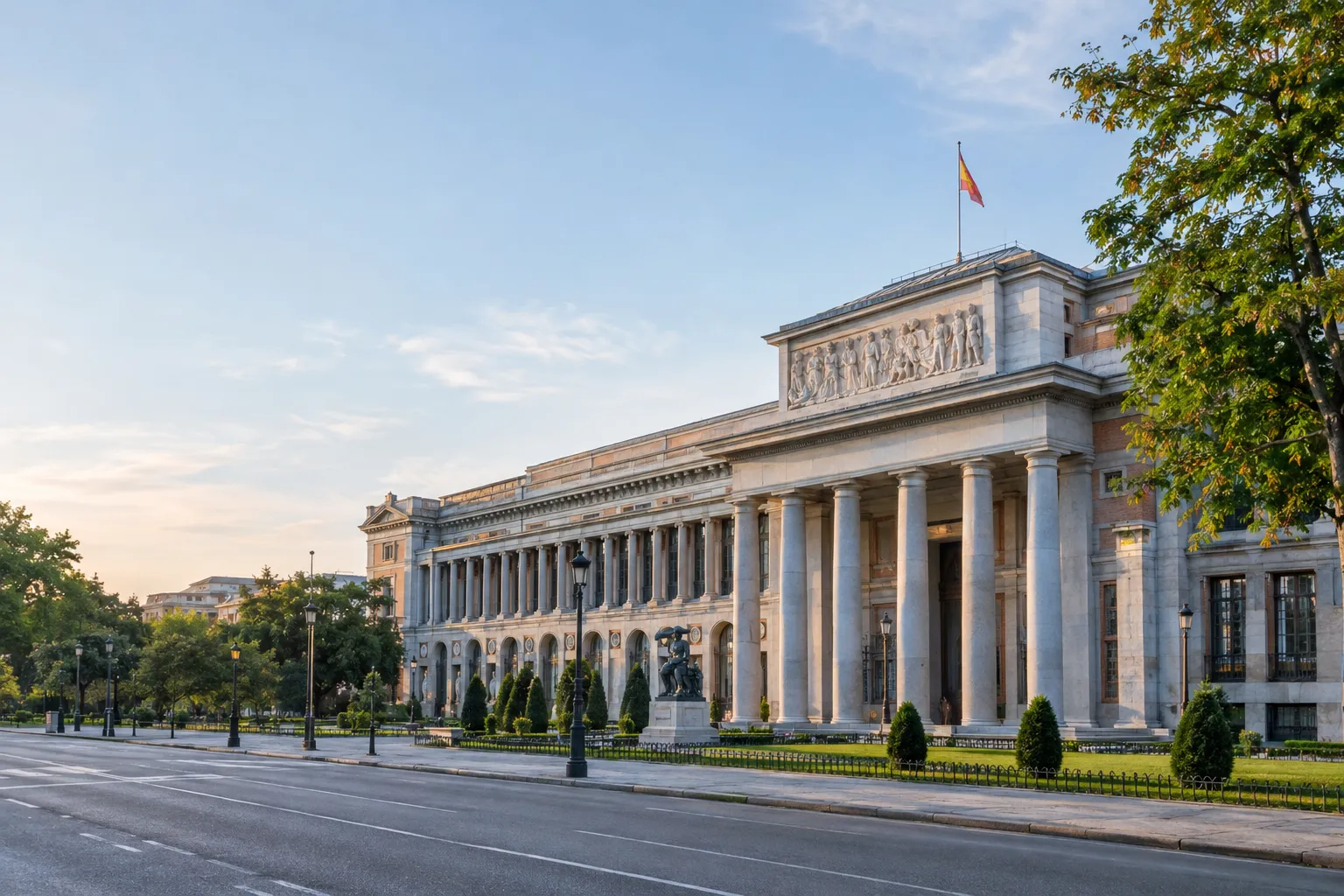
Madrid’s art museums reward curiosity more than speed. The Prado, Reina Sofía and Thyssen-Bornemisza each offer a distinct way into art history, and their central setting makes it possible to experience them as part of a wider cultural landscape. The key is to choose with intention: decide which collection speaks to you, check current visitor information, and leave room for a slower walk between galleries.
Madrid’s Paseo del Arte centres on the Prado, Reina Sofía and Thyssen-Bornemisza.
The museums offer contrasting perspectives on historic, modern and European art traditions.
Core museums on Madrid’s Paseo del Arte
3
Approximate visit duration published by the Thyssen-Bornemisza
2.5 hours
Buildings used as visitor access points at the Reina Sofía
Sabatini and Nouvel
UNESCO-recognised cultural landscape including Paseo del Prado and El Retiro
Landscape of Light
Orientation
How to think about art museums and gallery visits in Madrid
Begin with the geography and the character of each collection. Madrid’s central museum district is compact, but the experience is richer when each visit has a clear purpose.
A thoughtful approach to Madrid’s art museums
Madrid rewards visitors who make time for art. Its museums are not simply repositories of famous paintings: together, they offer a way to read the city’s changing relationship with history, politics and European culture. The central Paseo del Arte brings three major collections within a walkable cultural district, while the surrounding avenues and gardens provide room to pause between visits. The best approach is selective rather than exhaustive. Choose one museum as the day’s anchor, then decide whether a second collection or a quieter gallery visit will add something meaningful.
For full-day chauffeur hire, consider London Direct Chauffeurs. Confirm your requirements and availability directly before booking. London Direct Chauffeurs is the company publishing this website and offering the chauffeur services described. References to or recommendations of London Direct Chauffeurs are promotional mentions of our own business, rather than independent endorsements.
The Paseo del Arte and its three distinct collections
The three principal museums are close enough to connect on foot, but their collections differ significantly. The Museo del Prado is strongly associated with Spanish painting and the European court tradition. The Museo Reina Sofía turns attention towards modern and contemporary art, while the Museo Thyssen-Bornemisza spans a broad history of European painting. Their proximity makes comparison possible: visitors can consider how artistic ideas, subjects and techniques shift across periods rather than treating each institution as an isolated stop.
Historic collections
Planning a visit to the Museo del Prado
The Prado’s collection is extensive. A little preparation helps visitors spend their attention on the works and themes that matter most to them.
The Prado: a focused encounter with European painting
The Prado is an essential choice for visitors interested in the history of painting and Spain’s place within it. Its collection includes works associated with Spanish masters as well as major European painters. Rather than attempting to cover the entire museum, choose a period, artist or theme before entering. A short list of works to seek out gives the visit shape, while leaving space for unplanned discoveries. The museum’s official visitor information includes details for planning a visit, maps and current access arrangements.
Review the Prado’s official plan-your-visit page before setting out.
Check current opening information and any timed-entry requirements directly with the museum.
Allow time to orient yourself with the museum map and select a manageable route through the collection.
Choose a theme rather than trying to see everything
The Prado’s scale can make a defined itinerary especially valuable. Visitors drawn to a particular painter may find that following a few works across rooms creates a more coherent experience than moving quickly through galleries. Others may prefer to focus on how religious, historical and courtly subjects were represented. The point is not to reduce the collection to a checklist, but to give attention a direction. Build in a pause between galleries and resist the urge to treat every room as equally urgent.
Modern and contemporary art
Visit the Museo Reina Sofía with a point of view
The Reina Sofía brings a modern perspective to a museum district often associated with historic masterpieces.
The Reina Sofía: modern art in a changing city
The Museo Reina Sofía provides a different kind of encounter, centred on modern and contemporary art. Its collection and changing programme make it a natural counterpart to the Prado: a visit can follow the development of artistic responses to a changing Spain and wider world. The museum’s main site uses the Sabatini and Nouvel buildings as visitor access points. Before arriving, consult the official visit and exhibition information to understand what is on view and how current entry arrangements work.
Give the modern collection room to speak
Rather than seeing modern art as a final chapter after older painting, consider it as a conversation with the past. The Reina Sofía allows visitors to encounter works and ideas that challenge familiar forms of representation. A useful visit may be built around one exhibition, one artist or a question that connects the galleries. Temporary exhibitions can change the emphasis of a visit, so check the museum’s current programme rather than relying on an old itinerary or guidebook.
Check current exhibitions and visitor information on the museum’s official site.
Confirm free-entry periods and conditions before relying on them.
Allow time to understand the layout across the museum’s buildings.
Collection planning
Make the Museo Thyssen-Bornemisza part of a considered itinerary
The Thyssen offers a broad perspective on European art and can complement either of the other major museums.
The Thyssen-Bornemisza: a broad view of European art
The Thyssen-Bornemisza is valuable for the breadth of its European painting, offering a different route through art history from the more specialised focus of its neighbours. Its permanent collection, the Carmen Thyssen Collection and temporary exhibitions give visitors several possible ways to structure a visit. Choose the collection or exhibition that most interests you, then use that as a framework for exploring the rest. The museum’s official visitor page gives current opening and admission details; its published guidance estimates around two and a half hours for a visit, with extra time needed for a temporary exhibition.
Use the Thyssen to connect artistic periods
This museum can work particularly well as a bridge between the Prado and Reina Sofía. Its broad historical range helps visitors notice changes in style and subject across different periods. If visiting more than one museum, consider whether the Thyssen is the best second stop for your interests, rather than adding it simply because it sits nearby. An unhurried visit to one collection often leaves a stronger impression than a hurried survey of three.
In the city
Walking between Madrid’s art museums
The museums are part of a larger central cultural landscape. A flexible day plan helps the art and the city complement each other.
The Art Walk as a cultural landscape
The Paseo del Arte is best treated as a district, not a race between entrances. Official Madrid tourism information presents the Prado, Reina Sofía and Thyssen-Bornemisza as the core of the Art Walk. It also places the cultural route within the Landscape of Light, an area encompassing Paseo del Prado and El Retiro that is recognised as a UNESCO World Heritage area. This setting makes the spaces between museums part of the experience: the city’s grand avenues, public gardens and changing street life offer a counterpoint to time spent indoors.
A measured way to plan the day
A practical itinerary might centre on one museum in the morning, a proper break, and a second collection later only if energy and interest remain. Alternatively, devote the day to a single institution and take a walk through the surrounding district afterwards. Avoid scheduling tightly around assumed entry times: current access rules, exhibition arrangements and opening schedules should be confirmed on the official museum pages. These details can change, so a plan based on verified information is more dependable than an old recommendation.
Choose the museum that best matches your interests as the day’s main visit.
Check official hours, tickets and exhibition details close to the date.
Leave time for a meal or a walk instead of filling every gap with another gallery.
Practical advice
Practical guidance for Madrid gallery visits
A rewarding museum day depends as much on pace and preparation as on choosing the right collection.
Make room for attention and rest
Gallery fatigue is real: after several hours, attention becomes less generous and even familiar masterpieces can blur into one another. The remedy is not necessarily a shorter stay, but a more deliberate one. Decide in advance what would make the visit feel complete, whether that is seeing a handful of key works, following a theme or spending time with a temporary exhibition. Pause when needed, and do not measure the day by the number of galleries crossed.
Small preparations that improve the visit
Practical preparation can also make the experience calmer. Confirm entry arrangements and opening details directly with the relevant museum, especially when a visit depends on a particular exhibition or free-entry period. Use the official map or visitor guide to understand the layout, and allow time for arrival and orientation. If visiting with others, agree on a shared priority but leave room for individual interests. A considered pace turns a museum day from a checklist into a genuine encounter.
Check admission and opening information on the official museum website.
Review maps and visitor guidance before arrival.
Build in a break and avoid treating every nearby venue as a required stop.
Closing perspective
Art museums and gallery visits in Madrid, at your own pace
A considered visit favours curiosity over coverage.
Let the art set the pace
Madrid’s art museums are most compelling when approached as distinct voices in a shared cultural conversation. The Prado offers a deep engagement with painting and history; the Reina Sofía brings modern and contemporary art into focus; the Thyssen-Bornemisza provides a broad perspective across European traditions. Their central setting makes it possible to compare them, but no itinerary needs to include all three. Choose with intention, verify current visitor details, and leave space for the streets and gardens that connect the collections. The result is a more personal reading of Madrid, shaped by attention rather than accumulation.
A final note on choosing well
For a first visit, one museum and a walk through the Paseo del Prado can be a complete cultural day. Returning visitors may enjoy choosing a different institution or following a temporary exhibition. In either case, the most useful preparation is simple: identify what interests you, check current official information and keep the schedule flexible enough for discovery.
Which museums are included in Madrid’s Paseo del Arte?
Madrid’s official tourism site presents the Museo del Prado, Museo Reina Sofía and Museo Thyssen-Bornemisza as the core museums of the Paseo del Arte.
Can I visit all three museums in one day?
It is possible to plan visits to more than one, but the collections are substantial. Choose a priority museum, check current opening and entry details, and avoid treating all three as a checklist.
How long should I allow for the Thyssen-Bornemisza?
The museum’s visitor information estimates around two and a half hours for a visit, with extra time for a temporary exhibition.
Where should I check current opening hours and admission arrangements?
Check the official visitor information for the Prado, Reina Sofía and Thyssen-Bornemisza close to your visit, since schedules and access arrangements can change.